Behind VerdinCore
The person behind the platform, and the years of work that brought it here.
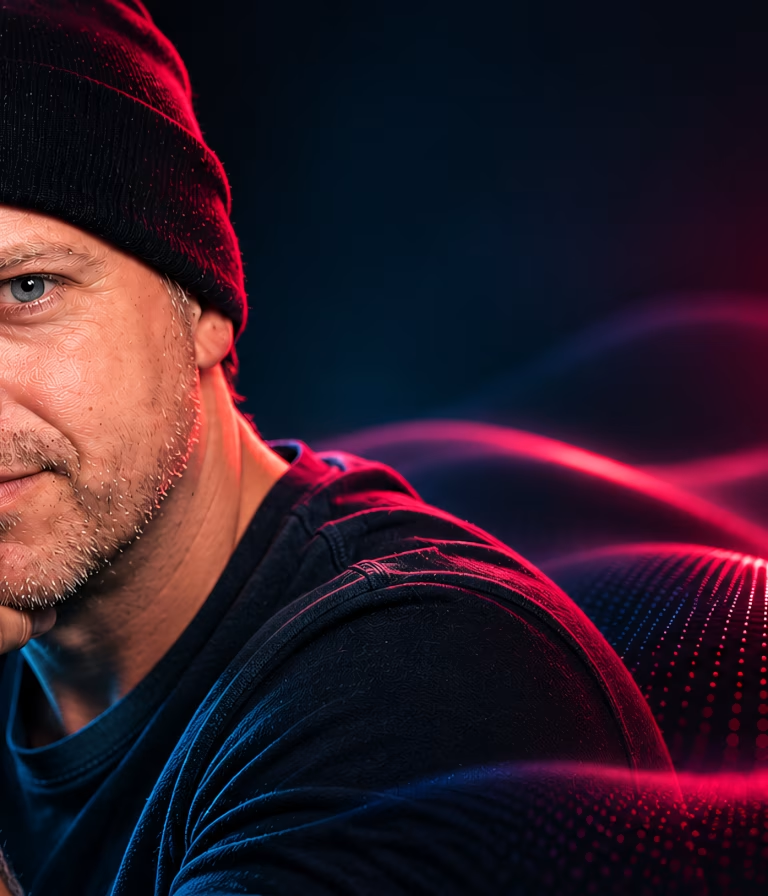
My name is Tom Papatolis. I'm a software engineer, originally from Greece and based in Düsseldorf, Germany.
I've spent decades working with technology, writing software, exploring systems, solving problems, and occasionally creating a few new ones along the way.
My professional experience spans software development, systems integration, and IT operations. That combination has shaped how I approach engineering. I enjoy designing and building software, but I'm equally interested in what happens after it goes into production.
Because that's when the real education begins.
A system can be beautifully designed and still be frustrating to use. A feature can be technically impressive and practically irrelevant. And something that works perfectly during a demonstration can become a maintenance headache six months later.
I've learned to take those differences seriously.
It started with a practical need
The work that eventually became VerdinCore began in 2017.
There was no business plan, no product launch, and no grand announcement. I needed a publishing system that worked the way I believed publishing software should work.
So I started building one.
Over time, that initial work grew into something considerably larger. Websites were launched, content was published, interfaces changed, and capabilities were developed in response to actual needs.
The system was running on real websites. It had to handle real content, everyday editorial work, and the less glamorous responsibilities that come with keeping a website operational.
I wasn't just writing the software. I was using it, maintaining it, and dealing with the consequences of my own decisions.
That experience became one of the most important influences on VerdinCore.
Building something you have to live with
When you build software for yourself and use it regularly, you lose the luxury of ignoring its shortcomings.
If an operation requires five unnecessary steps, you encounter those steps again tomorrow. If a feature creates more problems than it solves, you're the person who has to maintain it. If an architectural decision turns out to be wrong, sooner or later you have to confront it.
There is something valuable about that kind of accountability.
It has taught me to appreciate straightforward solutions, consistent behavior, and software that remains understandable as it grows.
It has also made me increasingly selective.
Over the years, I've considered far more features than I've actually implemented. Some were interesting technical challenges. Others looked attractive on paper. Many simply didn't justify the complexity they would introduce.
Learning when not to build something has been just as important as learning how to build it.
More than writing code
My interest in software has never been limited to a particular language, framework, or technology.
I enjoy the entire process: understanding a problem, working out an architecture, building the components, shaping the interface, deploying the result, and improving it through use.
VerdinCore reflects that approach.
Its content model, editor, publishing workflows, rendering system, image processing, and operational tools weren't developed as isolated demonstrations. They were built to work together as parts of a system I could actually operate.
Of course, that doesn't mean every decision has been perfect.
Some ideas have been abandoned. Others have been redesigned. Earlier implementations have been replaced when better approaches became available.
I don't consider that a weakness. Software engineering is an ongoing process of learning, and a system that never changes is not necessarily a system that has reached perfection.
Sometimes it simply means nobody is asking difficult questions anymore.
Why make it public now?
For most of its existence, VerdinCore was something I worked on quietly.
A small number of people knew about parts of it. Very few knew the full extent of the work behind the websites it powered.
For everyone else, it was essentially invisible.
That has now changed.
I decided to give the platform a public identity, document its capabilities, explain its design decisions, and make the work available for others to examine.
Not because I believe VerdinCore is the answer to every publishing problem. It isn't.
And not because I consider the project finished. I don't.
I'm making it public because I believe the work has reached a point where it deserves to be evaluated beyond my own websites and my own requirements.
After years of development and practical use, it's time to open that conversation.
Independent by choice
VerdinCore is proprietary software, developed independently and shaped by the practical experience of building and operating websites.
It isn't the product of a large engineering organization, and I'm not interested in presenting it as one.
I prefer to be clear about what the platform does, what it doesn't do, and why certain decisions were made.
I believe credibility comes from the work itself: the quality of the implementation, the usefulness of the features, the consistency of the experience, and the willingness to acknowledge limitations.
Those are the standards I want VerdinCore to be judged against.
What comes next
I intend to keep developing VerdinCore, improving its capabilities, and learning from its use.
Making the project public creates possibilities that didn't exist while it remained largely private: new perspectives, useful criticism, potential collaborations, and perhaps opportunities I haven't considered yet.
I don't know exactly where those possibilities will lead.
What I do know is that the software has already been a meaningful part of my work for years. Bringing it into the open is the beginning of a different chapter.
If you're interested in the platform, have a project in mind, or simply want to exchange ideas about software and publishing, I'd be glad to hear from you.
— Tom Papatolis